They Built It, They Missed It: Seven Creators Who Had No Idea What They'd Actually Made
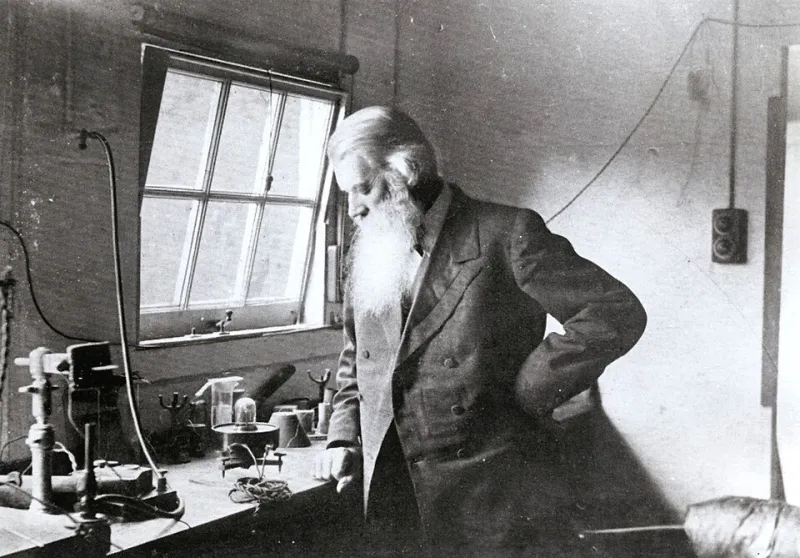
Photo: Tyne & Wear Archives & Museums, No restrictions, via Wikimedia Commons
They Built It, They Missed It: Seven Creators Who Had No Idea What They'd Actually Made
Invention has a mythology problem. We love the story of the lone genius who sees clearly what everyone else misses — who knows, in the moment of creation, exactly what they've done and what it means. The truth is considerably messier, and considerably more interesting.
Some of the most transformative things ever built in America were completely misread by the very people who built them. Not because those people were unintelligent — many of them were brilliant. But because the gap between what you intend and what you've actually created can be wide enough to swallow a legacy whole.
Here are seven people who built something extraordinary and, at least for a while, had absolutely no idea what it was.
1. Thomas Edison Thought He'd Made a Business Machine
When Thomas Edison developed the phonograph in 1877, he sat down and wrote out a list of the device's intended applications. Recording the last words of dying people was on the list. Preserving the voices of great orators for posterity. Teaching spelling to children. Making clocks announce the time aloud. Helping blind people read books.
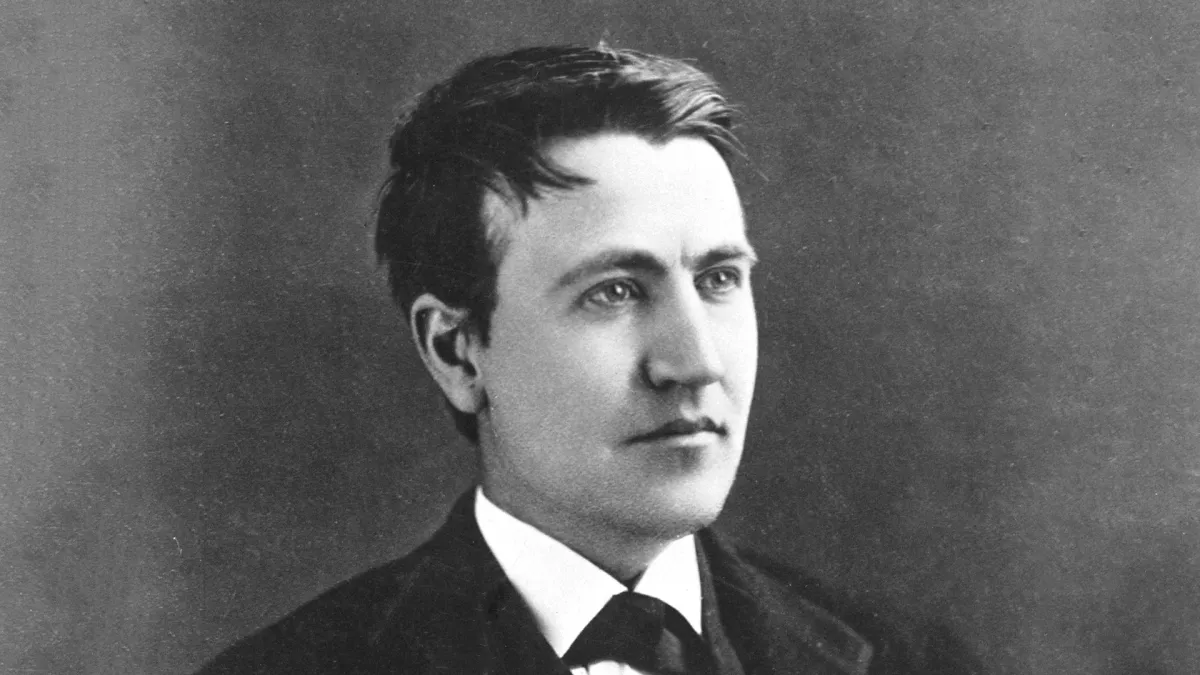 Photo: Thomas Edison, via cdn.britannica.com
Playing music for fun? Not on the list.
Edison actively resisted the idea that his phonograph was a music delivery device for years. When early entrepreneurs started putting coin-operated phonographs in arcades to play popular songs — and people lined up to pay for the experience — Edison was dismissive. He thought it cheapened the machine. He was building a dictation device, a business tool, a serious instrument for serious purposes.
The music industry that grew from his invention went on to become one of the most lucrative in human history. Edison spent years being annoyed about it.
2. Ray Tomlinson Sent an Email and Immediately Forgot What He'd Written
In 1971, Ray Tomlinson, an engineer at a Cambridge-based tech company called BBN Technologies, sent the first networked electronic message between two computers sitting side by side in the same room. He chose the @ symbol to separate usernames from computer addresses — a decision that would eventually become one of the most recognized typographical choices in human history.
What did the first email say? Tomlinson later recalled that it was probably "QWERTYUIOP" or something equally meaningless — a test string he typed without thinking and immediately forgot. He told colleagues about what he'd done almost as an aside, reportedly saying it was "not a big deal" and suggesting they not mention it to management since he'd technically been working on something else at the time.
The "not a big deal" has since become the communication backbone of the entire modern world.
3. William Lear Built a Jet for Rich People and Accidentally Democratized the Sky
When William Lear launched the Learjet in 1963, his vision was specific and unapologetically exclusive: a small, fast aircraft for wealthy executives who needed to move between cities without the indignity of commercial aviation. It was a luxury product, full stop.
What Lear didn't anticipate was that his aircraft would essentially create the template for the entire business aviation industry — and, more broadly, reshape the economics of private and charter flight in ways that eventually trickled down to regional carriers and air taxi services. The engineering standards he pioneered, the market he proved existed, the manufacturing approach he developed — all of it cascaded outward far beyond his original wealthy clientele.
Lear spent most of his later years focused on a next-generation steam-powered bus engine, convinced that was where his real legacy lay. The bus never worked. The jet changed everything.
4. The Man Who Thought He Was Making a Toy
In the 1940s, naval engineer Richard James was working with tension springs for a ship stabilization project when one fell off a shelf and walked its way across the floor in a series of graceful arcs. His wife Betty recognized what he'd actually found: a toy. James thought it was a novelty at best — a cute trick, nothing more.
He was persuaded to demonstrate the Slinky at Gingbel's department store in Philadelphia in 1945. Four hundred units sold in ninety minutes.
James remained oddly disconnected from what he'd created, eventually abandoning the business — and his family — to join a religious cult in Bolivia in the 1960s. Betty James took over, ran the company for decades, and turned the Slinky into one of the bestselling toys in American history. Over 300 million have been sold. Richard James died in Bolivia, still apparently more interested in the spiritual journey than the spring.
5. Philo Farnsworth Invented Television and Spent His Life Wishing He Hadn't
Philo Farnsworth was fourteen years old and plowing a potato field in Idaho when he conceived the basic idea for electronic television — imagining the way a field could be scanned row by row, the same way an electron beam might scan a screen. He built a working prototype by the time he was twenty-one.
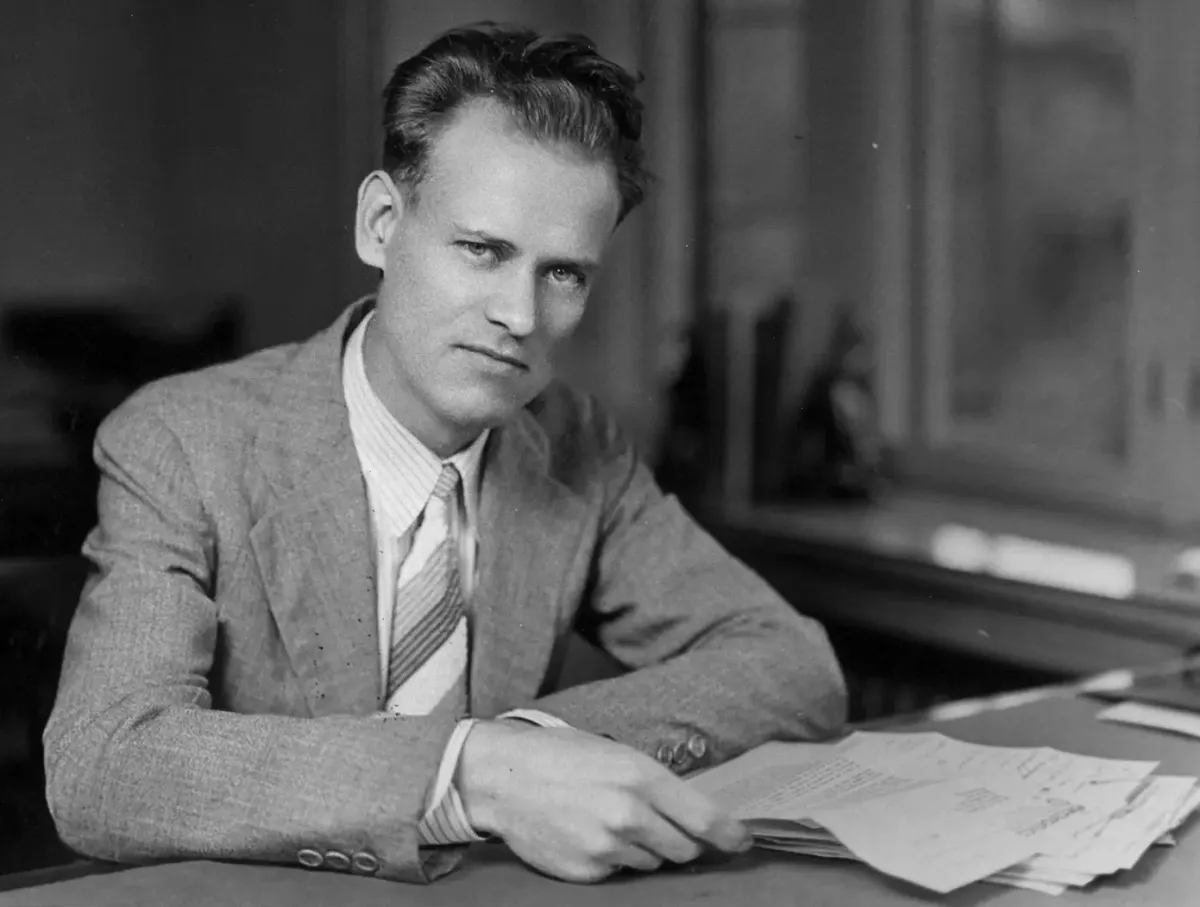 Photo: Philo Farnsworth, via www.descopera.ro
But Farnsworth's relationship with his own invention curdled over time. He'd imagined television as an educational medium — a tool for bringing knowledge and culture to people in remote areas who had no access to great universities or concert halls. What it became was something he found increasingly difficult to watch.
In his later years, he reportedly refused to allow his children to watch TV, and told his wife that he felt he had created a monster. When a friend asked if he'd seen anything good on television recently, Farnsworth allegedly replied that there was nothing on it worth watching. He died in 1971, largely uncredited and deeply ambivalent about the thing that bore his fingerprints.
6. Wilson Greatbatch Threw His Prototype in a Box and Walked Away
In 1956, Wilson Greatbatch was building a circuit to record heart sounds when he accidentally installed the wrong resistor. The circuit began pulsing rhythmically instead of recording anything. Greatbatch stared at it, recognized that the pulse matched a human heartbeat, and then — by his own account — sat quietly for two full minutes.
He knew what he had. But his initial response was to put the device in a box and set it aside, convinced that no surgeon would ever agree to implant an electronic device in a human chest. He went back to his regular work. He spent two years talking himself back into the idea before finally approaching a surgeon willing to try it.
The implantable cardiac pacemaker he eventually developed has since saved millions of lives. Greatbatch's first instinct was to shelve it because it seemed too strange to be practical. History had other plans.
7. Clarence Birdseye Thought He Was Solving a Logistics Problem
In the early 1920s, Clarence Birdseye was working as a fur trader in Labrador, Canada, and noticed that fish frozen quickly in the arctic air tasted far better when thawed than fish frozen slowly by conventional methods. He filed this away as a practical observation about food preservation and eventually developed a flash-freezing process he thought would be useful for shipping seafood to markets.
What he'd actually done was invent the modern frozen food industry — and, with it, fundamentally alter the American diet, the American grocery store, and the American relationship with cooking. The concept of a frozen meal that could be prepared in minutes didn't exist before Birdseye's process made it possible. The entire infrastructure of the modern American supermarket's freezer aisle traces back to a fur trader standing on ice in Labrador, thinking mostly about fish.
Birdseye sold his patents and trademarks to what would become General Foods for $22 million in 1929. He spent the rest of his life tinkering with other inventions — a spotlight for store displays, a method for converting paper pulp into building materials — never quite grasping that he'd already changed the world.
What History Decides
There's a thread running through all seven of these stories that's worth sitting with for a moment.
None of these people were careless or unobservant. Most of them were genuinely brilliant. But invention, it turns out, is only half the equation — and not always the more important half. The other half is recognition: understanding not just what you've made, but what it means, what it can become, what it might do to the world once it escapes your hands.
Sometimes that recognition comes from the inventor. Sometimes it comes from a spouse, a colleague, a random customer who picks up the thing and immediately understands it better than its creator ever did.
And sometimes history just waits patiently until the inventor is gone, then makes up its own mind entirely.