Laughed Out of the Room, Then Laughed All the Way to the Bank: Seven American Ideas That Survived Their Rejection
Photo: John W. Hetrick, CC0, via Wikimedia Commons
Rejection, in the history of American innovation, is less an exception than a rule. The story we tell ourselves — of the lone genius recognized in their time, celebrated and funded and sent off to change the world — is largely fiction. The more common story is messier, more painful, and ultimately more instructive: the great idea arrives, the gatekeepers say no, and then the question becomes whether the person holding the idea has enough stubbornness, luck, or desperation to survive long enough for the world to catch up.
Sometimes they do. Sometimes they don't. Here are seven times they did — and what it cost to get there.
1. The Photocopier Nobody Wanted
Chester Carlson spent years trying to give his invention away. A trained physicist working as a patent attorney in New York, Carlson developed the basic principle of electrophotography — what would eventually become xerography, and eventually the Xerox machine — in a makeshift lab in his apartment in Queens in 1938. He then approached more than twenty major corporations, including IBM, RCA, and General Electric, all of whom passed.
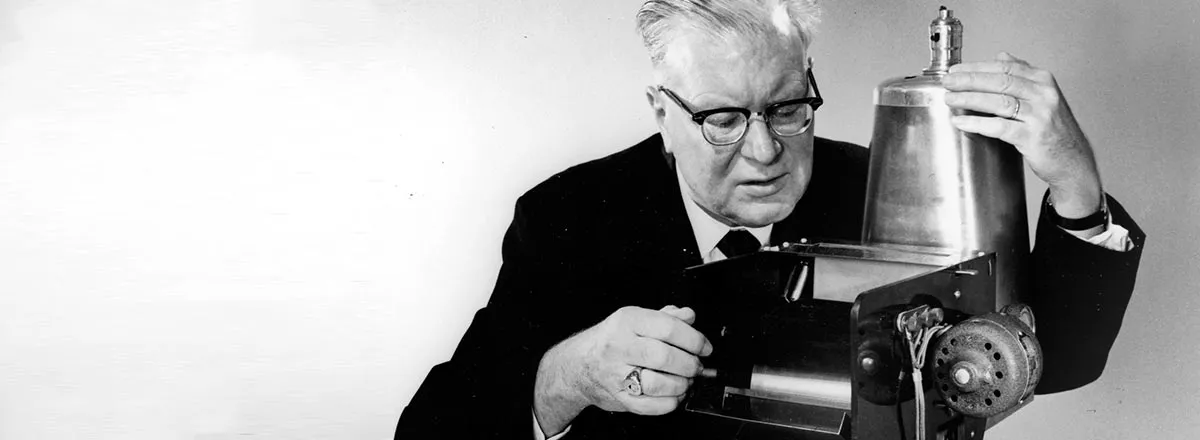 Photo: Chester Carlson, via images.ctfassets.net
The rejection letters were variations on a theme: no discernible market, impractical technology, insufficient commercial potential. One executive reportedly told him that carbon paper worked perfectly fine.
It took the Haloid Company — a small, struggling photographic paper manufacturer in Rochester, New York — more than a decade of development and near-bankruptcy to bring the machine to market. When the Xerox 914 launched in 1959, it became one of the most successful commercial products in American history. Haloid, which renamed itself Xerox, became a Fortune 500 company almost overnight.
Carlson's patent eventually earned him millions. The corporations that turned him down watched from the sidelines.
2. The Television Signal Nobody Believed In
Philo Farnsworth was nineteen years old and living in Idaho when he first sketched out the concept for an all-electronic television system. He was the son of a farmer. He had no college degree. He had, by every conventional measure, no business developing the technology that would define the twentieth century.
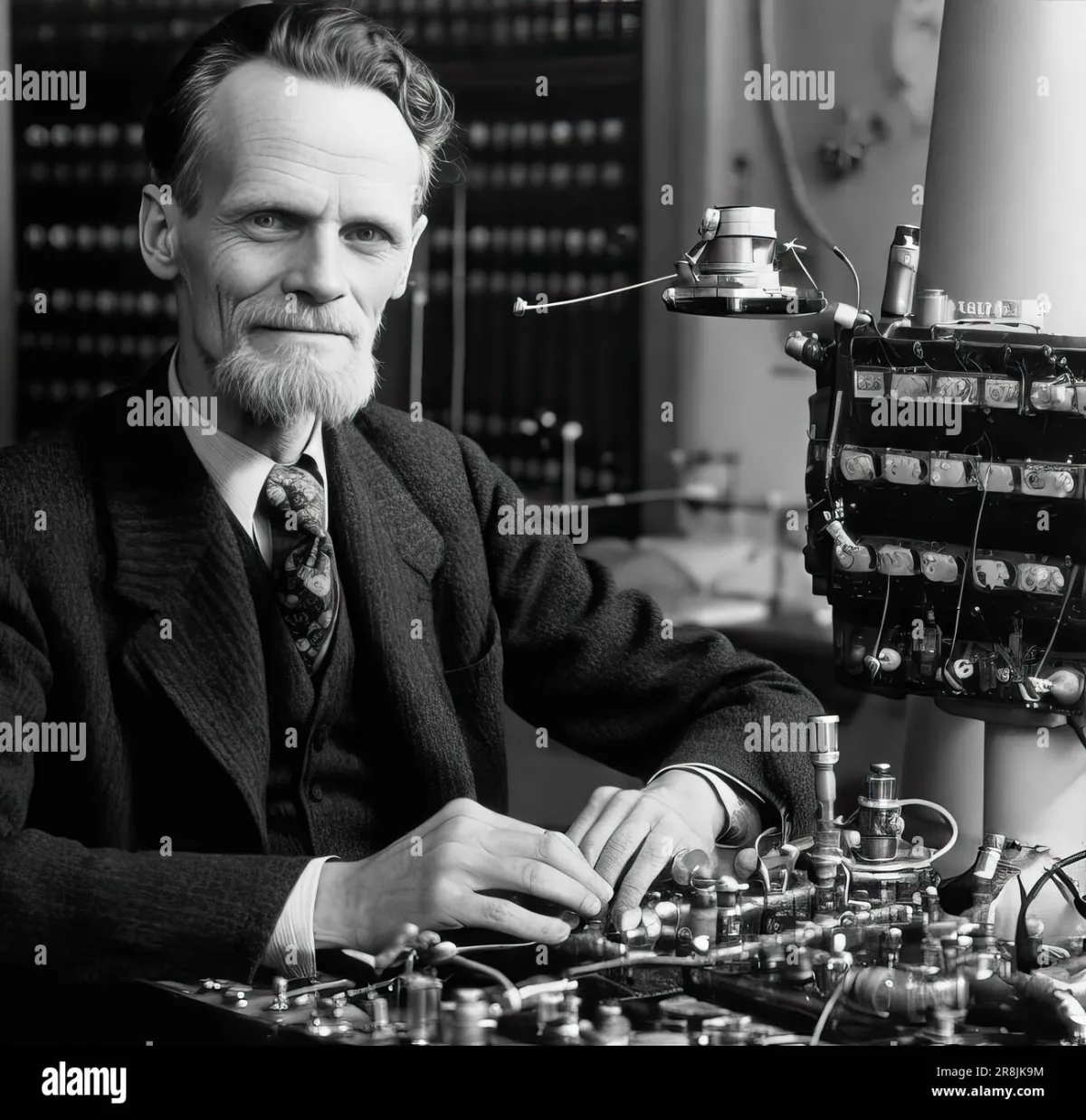 Photo: Philo Farnsworth, via c8.alamy.com
RCA, the dominant force in American broadcasting, was not interested in a teenager from the potato fields. David Sarnoff, RCA's powerful chief, dispatched an engineer to evaluate Farnsworth's work — and then spent years attempting to acquire or replicate it without paying for it. When legal battles eventually confirmed Farnsworth's patents, RCA was forced to pay licensing fees, something Sarnoff had never done before.
Farnsworth lived long enough to watch a moon landing on television. He reportedly told his wife, watching the broadcast in 1969, that it had all been worth it. He died two years later, his contributions still vastly underrecognized.
3. The Search Engine That Couldn't Find a Buyer
In 1998, Larry Page and Sergey Brin tried to sell their search technology to the established players in the internet space for one million dollars. Excite, then one of the web's dominant portals, turned them down flat. Its CEO later explained that a search engine too good at finding things would drive users off the site too quickly — an argument that, in retrospect, reveals how thoroughly the industry misunderstood what users actually wanted.
Page and Brin went back to Stanford, kept building, and eventually launched Google. By 2023, the company's market capitalization exceeded a trillion dollars.
Excite no longer exists in any meaningful form.
4. The Overnight Delivery Service That Earned a C
Fred Smith wrote a paper at Yale in the late 1960s outlining a concept for a national overnight delivery network that would use a hub-and-spoke model to move packages more efficiently than existing systems. His professor gave the paper a C, noting that the idea was interesting but not feasible.
Smith founded Federal Express in 1971. The early years were genuinely harrowing — at one point, the company was so close to bankruptcy that Smith flew to Las Vegas with the last $5,000 in the corporate account and won $27,000 at blackjack to cover the fuel bill for the following week's flights.
FedEx is now one of the largest logistics companies in the world, with annual revenues exceeding $90 billion.
5. The Toy Nobody Thought Adults Would Buy
When Ruth Handler proposed to the Mattel board of directors that the company produce a teenage fashion doll — a full-figured adult female doll in an era when the toy industry believed children only wanted to play with baby dolls — the reaction was skeptical at best. Her own husband, Mattel co-founder Elliot Handler, thought the idea was strange.
Handler had observed her daughter Barbara ignoring baby dolls in favor of paper dolls she could dress in adult clothing — imagining, Handler realized, futures rather than nurturing infants. She was convinced the market existed.
Barbie launched in 1959. She became the best-selling fashion doll in history, and the Barbie brand has generated an estimated $1 billion in annual revenue for Mattel for decades. The 2023 film based on the character grossed over $1.4 billion worldwide.
6. The Book That Thirty Publishers Turned Down
Richard Hooker's novel about a mobile army surgical hospital in the Korean War was rejected by twenty-one publishers before William Morrow took a chance on it in 1968. The book was considered too dark, too irreverent, too difficult to categorize for comfortable commercial placement.
M*A*S*H went on to sell millions of copies. The 1970 film adaptation was one of the highest-grossing pictures of its year. The television series that followed ran for eleven seasons — its finale remains one of the most-watched broadcasts in American television history.
Fifteen of the twenty-one publishers who passed have since gone out of business or been absorbed into larger conglomerates.
7. The Wireless Technology the Military Didn't Want
Hedy Lamarr is remembered, when she's remembered at all, as a golden-age Hollywood actress. What most people don't know is that she co-invented, during World War II, a frequency-hopping signal technology designed to prevent enemy jamming of Allied torpedoes. She and composer George Antheil patented the idea and offered it to the U.S. Navy.
 Photo: Hedy Lamarr, via c8.alamy.com
The Navy declined. The technology was too complicated, they said, and the suggestion that an actress had invented something militarily useful was not taken especially seriously.
The patent expired before anyone acted on it. Decades later, the underlying principle of frequency hopping became the foundational technology behind modern Wi-Fi, GPS, and Bluetooth. Lamarr received the Electronic Frontier Foundation's Pioneer Award in 1997, a few years before her death, finally acknowledged for an invention that had quietly become part of almost every wireless device on earth.
The Question That Doesn't Have a Comfortable Answer
These seven stories share a structure: the idea, the rejection, the survival, the vindication. They're satisfying because they resolve. But they represent only the ideas that made it — the ones attached to people stubborn or fortunate enough to outlast the initial no.
For every Chester Carlson who kept going, there were likely dozens of inventors who couldn't afford to. For every Hedy Lamarr who lived long enough to be acknowledged, there were creators whose contributions dissolved into history without attribution.
The gatekeepers were wrong, repeatedly and expensively. The question worth asking isn't just how these seven ideas survived. It's how many didn't — and what we lost in the process.