Against All Odds and All Advice: Seven American Towns That Bet the Farm and Won
Small-town America has always had a complicated relationship with risk. On one hand, communities built on farming, mining, or manufacturing know better than most that a single bad season — a drought, a mine collapse, a factory closure — can unravel everything a town spent generations building. Caution isn't timidity in places like these. It's survival.
And yet. Every now and then, a town reaches the moment where caution and survival pull in opposite directions — where the safe choice is to slowly disappear, and the dangerous choice is to try something nobody believes will work.
These are the stories of seven American towns that chose the dangerous option. The outside experts were, almost universally, not impressed.
1. Lowell, Massachusetts — The Mill Town That Reinvented Itself as a Museum of Its Own Failure
By the 1970s, Lowell was a case study in post-industrial decline. The textile mills that had made it one of America's first industrial cities were shuttered, the canals were neglected, and the population was leaving with the same quiet persistence that water finds a downhill path. Economic advisors suggested the usual prescriptions: light manufacturing, retail development, maybe a highway interchange.
What Lowell chose instead was to make its own industrial ruins the attraction. The city lobbied for and won designation as a National Historical Park — the first urban industrial park of its kind in the country — essentially betting that tourists would travel to see the physical evidence of an industry's death.
The experts were skeptical. The tourists came anyway. Lowell's reinvention as a heritage destination anchored a broader cultural revival that brought arts organizations, universities, and eventually a genuinely diverse economy back to streets that had gone quiet. The ruins turned out to be the most valuable thing the mills left behind.
2. Marfa, Texas — The Desert Town That Staked Everything on Minimalist Art
In the early 1970s, sculptor Donald Judd drove through Marfa, a remote high-desert town in far west Texas with a population of around 2,500, and decided it was where he needed to live and work. He began acquiring property and installing large-scale minimalist art in converted military buildings. The town watched this with a mixture of curiosity and bewilderment.
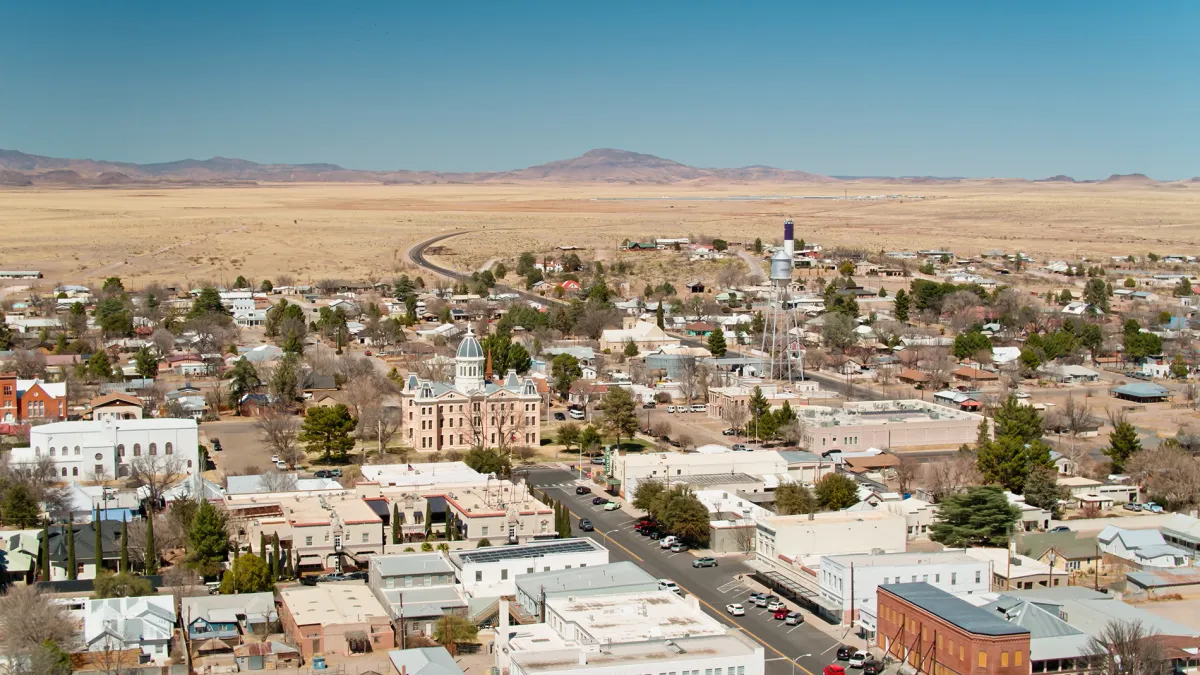 Photo: Marfa, Texas, via www.en-vols.com
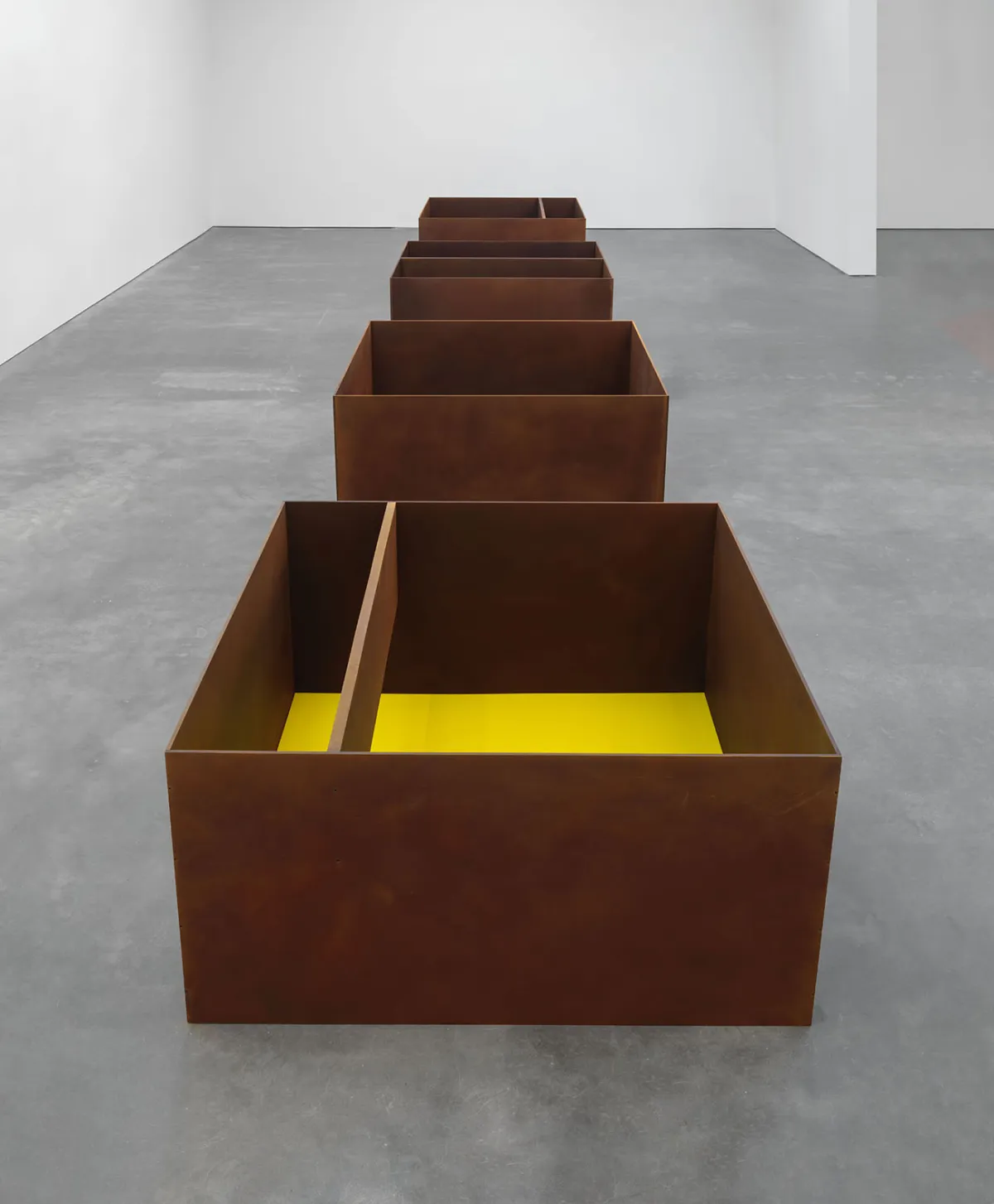 Photo: Donald Judd, via www.artchive.com
When Judd died in 1994, Marfa was still largely unknown outside the art world. The moment of maximum doubt came in the years that followed — would the whole project collapse without its founding visionary? The Chinati Foundation, which Judd had established to preserve the work, held on.
What happened over the next two decades transformed Marfa into one of the most unlikely cultural destinations in the United States. The town's very remoteness, which had once seemed like its greatest liability, became its defining appeal. You had to want to go to Marfa. And that act of wanting, that deliberate pilgrimage to the middle of nowhere, turned out to be exactly what a certain kind of traveler was looking for.
3. Greensburg, Kansas — The Town That Rebuilt Itself Green After a Tornado Took Everything
On May 4, 2007, an EF5 tornado destroyed approximately 95 percent of Greensburg, Kansas. Eleven people died. The town of 1,500 was, by any reasonable measure, gone.
The moment of maximum doubt came almost immediately, when early discussions about rebuilding surfaced a radical proposal: what if Greensburg rebuilt itself as a model sustainable community, powered entirely by renewable energy? Critics — including some Greensburg residents — argued this was no time for idealism. People needed homes, not experiments.
The town voted to try it anyway.
Greensburg rebuilt with LEED-certified buildings, a wind farm that now produces more electricity than the town consumes, and an identity as a living laboratory for sustainable community design. What had been a conventional Kansas farming community became a destination for urban planners, sustainability researchers, and journalists from around the world. The tornado took everything. The bet that followed gave the town something it had never had: a reason for the rest of the world to pay attention.
4. Roswell, New Mexico — The Military Cover-Up That Became a Tourism Economy
For decades after the 1947 incident that launched a thousand conspiracy theories, Roswell was just another small New Mexico city trying to hold its economy together with agriculture and a modest retail base. The UFO story was, for most of that period, an embarrassment as much as an asset — something locals mentioned with a shrug while hoping for a more dignified economic anchor.
The pivot came in the 1990s, when a few local entrepreneurs decided to stop apologizing for the story and start selling it. Hard. The International UFO Museum opened in 1991. Alien-themed shops, restaurants, and events followed. The annual UFO Festival began drawing tens of thousands of visitors.
The experts who had suggested Roswell diversify into light industry and regional commerce were not entirely wrong about the economics. What they missed was the cultural hunger for exactly this kind of place — a town that had leaned so completely into its own absurdity that visiting it became an experience you couldn't replicate anywhere else. Roswell now draws over a million visitors a year. The aliens never showed up. The tourists absolutely did.
5. Bisbee, Arizona — The Copper Ghost Town That Became an Arts Colony
When the copper mines closed in 1975, Bisbee looked like a town with no future. Perched in the mountains of southern Arizona, too remote for easy commuting, too small for conventional retail, it had been built entirely around a single industry that was now gone. Population dropped. Buildings emptied. The hillside Victorian houses that had once housed mining families began to deteriorate in the dry desert air.
What saved Bisbee was the artists who arrived precisely because it was cheap, strange, and empty. They came for the affordable housing and stayed for the architecture, the light, and the particular freedom of a place that had nothing left to lose. Galleries opened in storefronts that had been shuttered for years. Restaurants followed. Bed and breakfasts moved into the Victorian houses.
Bisbee is now routinely listed among the most distinctive small towns in America — a place whose identity is built almost entirely on the creative community that moved in after the economy left. The copper is gone. The character it left behind turned out to be worth considerably more.
6. Leavenworth, Washington — The Dying Lumber Town That Became a Bavarian Village
By the early 1960s, Leavenworth, Washington, was in serious trouble. The railroad had rerouted. The sawmill had closed. Downtown was emptying out and the community was watching its economic foundation crumble in real time.
The solution a group of local business owners proposed was, charitably, eccentric: restyle the entire town as a Bavarian alpine village. Change the architecture. Change the signage. Change the festivals. Convince visitors that a small town in the Cascade foothills was, somehow, Bavaria.
The ridicule was immediate and enthusiastic. Neighboring communities were not subtle about their skepticism. Even some Leavenworth residents thought the whole thing was slightly unhinged.
The transformation worked anyway. Leavenworth is now one of Washington State's most visited destinations, drawing over two million visitors annually to experience its meticulously maintained Bavarian aesthetic, its Christmas lighting festival, its Oktoberfest, and its general commitment to a bit that started as desperation and became identity. The town didn't find a new industry. It invented a new version of itself, wholesale, out of nothing but nerve.
7. Centralia, Pennsylvania — The Town That Refused to Disappear Into Its Own Fire
Since 1962, a coal mine fire has been burning beneath Centralia, Pennsylvania — an underground inferno that has been consuming the coal seams under the town for more than six decades. By the 1980s, most residents had been relocated by the state, buildings had been demolished, and the official position was that Centralia was essentially over.
A small group of residents refused to leave. They fought relocation orders, challenged eminent domain proceedings, and insisted on their right to remain in a town that the state had declared uninhabitable. Their stubbornness became, over time, a different kind of bet — not on economic revival, but on the right of a community to define its own ending.
Centralia today is a ghost town in the most literal sense: smoke still rises from vents in the cracked earth, the roads have buckled, and most of the structures are gone. But it draws visitors — curious, respectful visitors who come to see what a town looks like when it refuses to go quietly. The remaining residents became, almost accidentally, the caretakers of one of America's strangest landmarks. They didn't win in any conventional sense. But they didn't disappear either. And in Centralia's case, that turned out to be the whole point.
The Pattern in the Long Shot
Look across these seven stories and a pattern emerges that no economic development textbook would dare to recommend: the towns that survived weren't the ones that chased conventional wisdom. They were the ones that looked at their most unusual, most embarrassing, most apparently worthless asset — the ruins, the remoteness, the ridiculous story, the thing everyone else had written off — and decided that was the bet worth making.
The experts weren't always wrong about the risks. The risks were real. What the experts consistently underestimated was the appetite, in a country that loves an underdog, for places that had the audacity to try anyway.