When Silent Pictures Found Their Perfect Voice
The Language Only They Could Speak
In 1915, when D.W. Griffith's "Birth of a Nation" captivated audiences across America, the film industry was grappling with a fundamental challenge: how do you tell a story when no one can hear you speak? The answer came from an unexpected source—artists who had been perfecting visual communication their entire lives.
While hearing directors struggled to convey emotion and narrative through images alone, deaf and hard-of-hearing filmmakers already possessed something invaluable: fluency in the language of gesture, expression, and visual rhythm that would define cinema's golden age.
The Pioneers Who Saw What Others Missed
Granville Redmond wasn't supposed to become one of California's most celebrated landscape painters. Born deaf in 1871, he was expected to learn a trade—maybe carpentry or printing. Instead, he became Charlie Chaplin's closest friend and artistic collaborator, teaching the legendary comedian the nuanced art of pantomime that would make him a global icon.
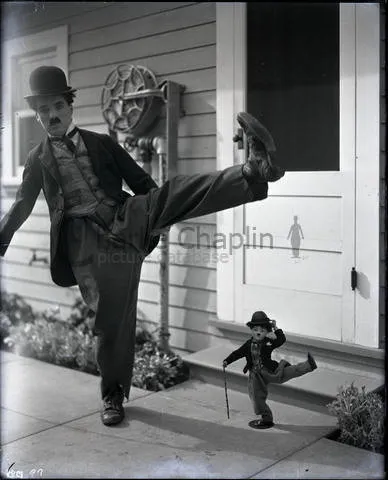 Photo: Charlie Chaplin, via www.charliechaplin.com
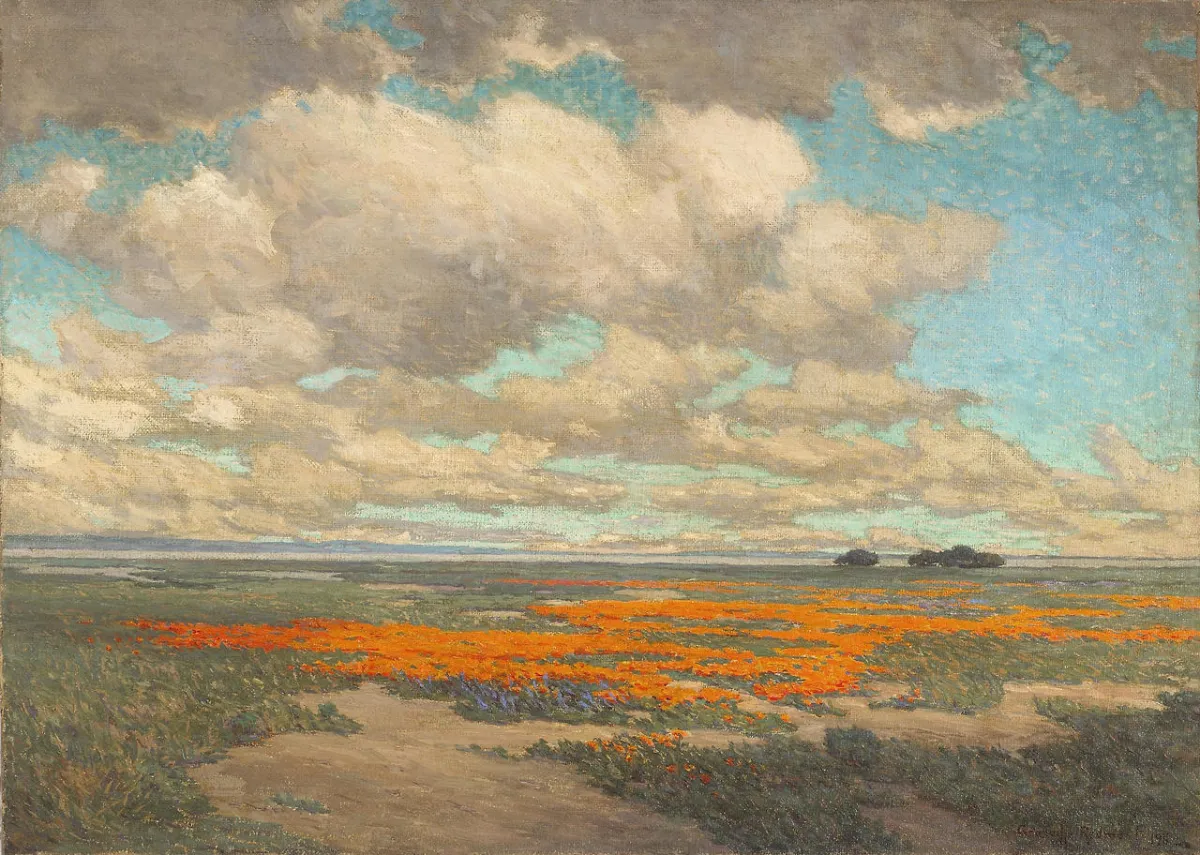 Photo: Granville Redmond, via 66.media.tumblr.com
Redmond appeared in several Chaplin films, but his real contribution was behind the camera. He understood something that escaped many early directors: silence wasn't the absence of communication—it was communication in its purest form. Every gesture had to carry weight, every facial expression had to tell a story, every movement had to advance the plot.
The Academy That Changed Everything
The California School for the Deaf became an unlikely breeding ground for Hollywood talent. Students there didn't just learn American Sign Language—they mastered the art of visual storytelling out of necessity. When early film studios needed actors who could convey complex emotions without dialogue, they often turned to the deaf community.
 Photo: California School for the Deaf, via upload.wikimedia.org
These performers brought something unique to the screen: an understanding that the human face and body could carry an entire narrative. They'd spent their lives reading micro-expressions and subtle body language cues that hearing people often missed. In a medium that relied entirely on visual communication, they were native speakers.
The Technology That Leveled the Playing Field
Early film sets were surprisingly accessible environments for deaf artists. Before sound recording, sets were already silent workplaces where communication happened through hand signals and written notes. Deaf crew members and performers could participate fully in the creative process without any accommodation—the industry had naturally evolved to meet them where they were.
Directors like Frank Borzage discovered that deaf actors brought an intensity to their performances that was hard to replicate. Without the crutch of spoken dialogue, they had developed an almost supernatural ability to project emotion through pure physical presence.
The Golden Age of Visual Storytelling
Between 1915 and 1927, American cinema reached artistic heights that some argue have never been matched. Films like "Sunrise," "The Cabinet of Dr. Caligari," and "Metropolis" told complex, emotionally rich stories without saying a word. This wasn't despite the absence of sound—it was because of it.
Deaf artists were instrumental in developing the visual vocabulary that made these masterpieces possible. They understood that a raised eyebrow could convey skepticism, that the tilt of a head could suggest vulnerability, that the spacing between two characters could communicate their emotional distance.
When the Industry Learned to Talk
The arrival of "talkies" in 1927 devastated the deaf artistic community in Hollywood. Overnight, an industry that had valued visual storytelling above all else became obsessed with dialogue. Many deaf performers found themselves suddenly unemployable, their skills deemed irrelevant in the new sound-focused era.
But their influence didn't disappear—it went underground. The visual storytelling techniques they had perfected became the foundation of film language itself. Every close-up that reveals character, every wide shot that establishes mood, every cut that creates rhythm can trace its lineage back to the silent era when deaf artists helped define what cinema could be.
The Modern Renaissance
Today, deaf artists are reclaiming their place in American cinema, but now they're working with sound as well as silence. Directors like Peter Wechsberg and actors like Marlee Matlin have proven that deaf perspectives bring unique insights to storytelling, whether in silent films or contemporary dramas.
Streaming platforms and social media have created new opportunities for visual storytelling that echo the silent era. TikTok videos, Instagram stories, and YouTube content often rely more on visual communication than dialogue—mediums where deaf creators often excel.
The Lesson Written in Light
The story of deaf artists in early Hollywood reveals something profound about creativity and limitation. What the hearing world saw as a disability, these artists transformed into their greatest strength. They didn't overcome their deafness to succeed in film—they succeeded because of their deafness.
Their mastery of visual communication became the foundation of an entire art form. When Hollywood needed to learn how to tell stories without words, deaf artists were already fluent in the language that would define cinema for decades.
The Silent Revolution
In a industry obsessed with who gets to speak and be heard, deaf artists in early Hollywood proved that the most powerful stories are sometimes told in silence. They understood that cinema's true power wasn't in its ability to reproduce reality, but in its capacity to transform reality into something more beautiful, more meaningful, and more emotionally resonant than anything the real world could offer.
Their legacy lives on in every film that trusts the audience to understand what they're seeing, in every director who knows that sometimes the most important moments happen in the spaces between words, and in every actor who understands that the camera sees everything—especially the things we don't say out loud.