The Education That Never Happened
Marcus Rivera was supposed to graduate from Lincoln High School in 1967. Instead, he was elbow-deep in suds at Sal's Seaside Diner, watching the Pacific waves crash against the California coast through a grease-stained window. At seventeen, formal education had failed him—or maybe he had failed it. Either way, the ocean didn't seem to mind his lack of credentials.
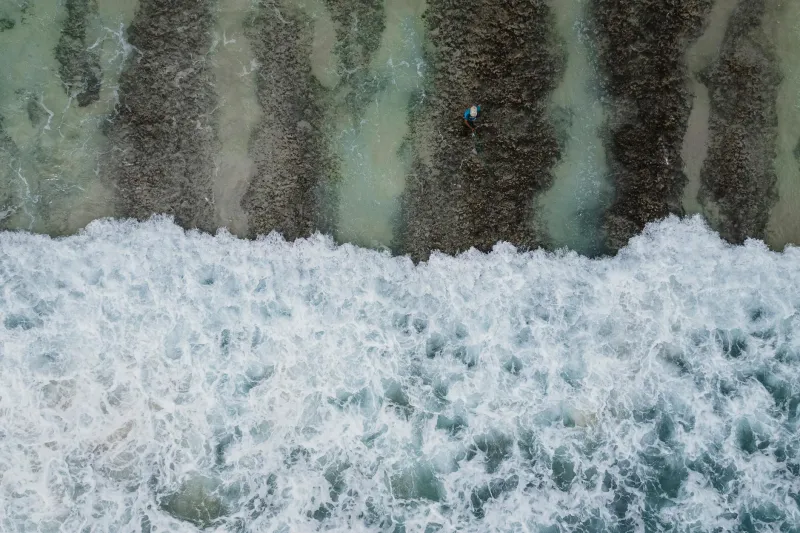
Every morning before his shift, Rivera would walk the rocky shoreline, crouching over tide pools with the patience of a monk and the curiosity of a child. While other teenagers worried about SATs and college applications, he was cataloging the daily rhythms of sea anemones, tracking the migration patterns of hermit crabs, and filling notebook after notebook with sketches that would make any field guide jealous.
"The ocean doesn't ask for your report card," Rivera would later tell audiences at marine biology conferences. "It just asks if you're paying attention."
The Library Became His Laboratory
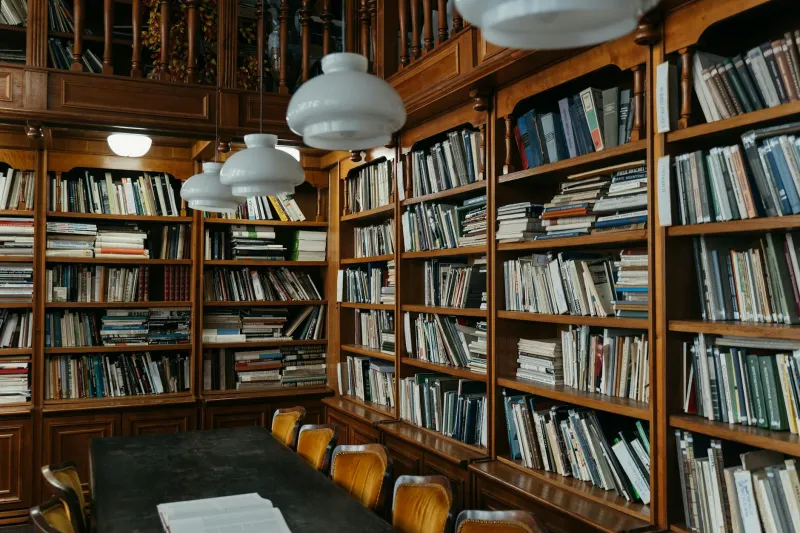
Without access to university resources, Rivera turned the Monterey Public Library into his personal research station. He memorized every marine biology text they had, cross-referencing his tide pool observations with scientific literature that most PhD students never touched. Librarians grew accustomed to finding him there every Tuesday and Thursday—his days off from the diner—surrounded by towers of books and his ever-present field notebooks.
What Rivera lacked in formal training, he made up for in time. While marine biology students spent semesters in lecture halls, he spent years in actual tide pools. His approach was purely observational, unfiltered by academic theories or established methodologies. This limitation would become his greatest strength.
The Chance Encounter That Changed Everything
In 1971, a research vessel from the Scripps Institution of Oceanography docked in Monterey for emergency repairs. While the crew waited for parts, Dr. Elena Vasquez, the expedition's lead marine biologist, decided to explore the local tide pools. She found Rivera there, as usual, but this time he was documenting something she'd never seen before—a feeding behavior in sea stars that contradicted everything she'd learned in graduate school.
"I watched this kid explain complex predator-prey relationships with the kind of detail that comes from years of patient observation," Dr. Vasquez recalled decades later. "He was describing phenomena that our instruments had missed, relationships that our brief research visits had never captured."
Rivera's notebooks contained four years of daily observations, weather patterns, tidal cycles, and behavioral documentation that represented more continuous field study than most marine biologists accumulated in their entire careers.
When Passion Meets Opportunity
Dr. Vasquez invited Rivera aboard the research vessel as an unofficial consultant. What was meant to be a three-day collaboration turned into a three-month expedition. Rivera's ability to spot patterns and anomalies that escaped trained researchers made him invaluable. More importantly, his unconventional background allowed him to ask questions that formally educated scientists had been trained not to ask.
The partnership produced three groundbreaking papers on coastal ecosystem dynamics, with Rivera listed as co-author despite having no degree, no institutional affiliation, and no formal credentials beyond a GED he'd earned by mail.
The Reluctant Academic
Scripps offered Rivera a research position, but there was one problem—he'd never set foot in a college classroom. The institution created a unique arrangement: Rivera would continue his field research while slowly completing undergraduate coursework through independent study. It took him eight years to earn a bachelor's degree, but during that time, his research revolutionized understanding of intertidal ecosystems.
His doctoral dissertation, completed at age thirty-five, was based entirely on field observations he'd been making since his dishwashing days. The work identified previously unknown symbiotic relationships between species that had been studied separately for decades.
The Ocean's Classroom
Rivera's unconventional path shaped his approach to marine biology in ways that traditional education never could. His research methodology emphasized long-term observation over short-term experimentation, pattern recognition over statistical analysis, and intuitive understanding over theoretical frameworks.
"Marcus taught us that the ocean is the ultimate teacher," said Dr. James Harrison, director of marine studies at UC Santa Barbara. "His work reminded an entire field that sometimes the best way to understand nature is to simply spend time with it."
Legacy in Salt Water
Today, the Rivera Method—long-term, observational marine research—is taught in universities worldwide. The man who once washed dishes while watching waves has authored over forty scientific papers and discovered six new species of marine life. The Monterey Bay Aquarium's research institute bears his name, and his field notebooks from the 1960s are considered foundational documents in marine ecology.
Rivera still visits tide pools, though now he's usually accompanied by graduate students eager to learn from the man who proved that the ocean's greatest classroom has no walls, no entrance requirements, and no graduation ceremony—just endless lessons for those willing to listen.
The dishwasher who became a professor never forgot that his greatest education happened not in lecture halls, but in the spaces between high and low tide, where curiosity matters more than credentials and the only degree that counts is the one the ocean grants to those who truly pay attention.