Too Weak to Fight, Too Stubborn to Quit: The Immigrant Kid Who Drew America's Greatest Hero

Too Weak to Fight, Too Stubborn to Quit: The Immigrant Kid Who Drew America's Greatest Hero
There's a particular kind of loneliness that comes from standing on the outside of something everyone else seems to take for granted. For Joe Shuster, that something was a body that worked the way it was supposed to.
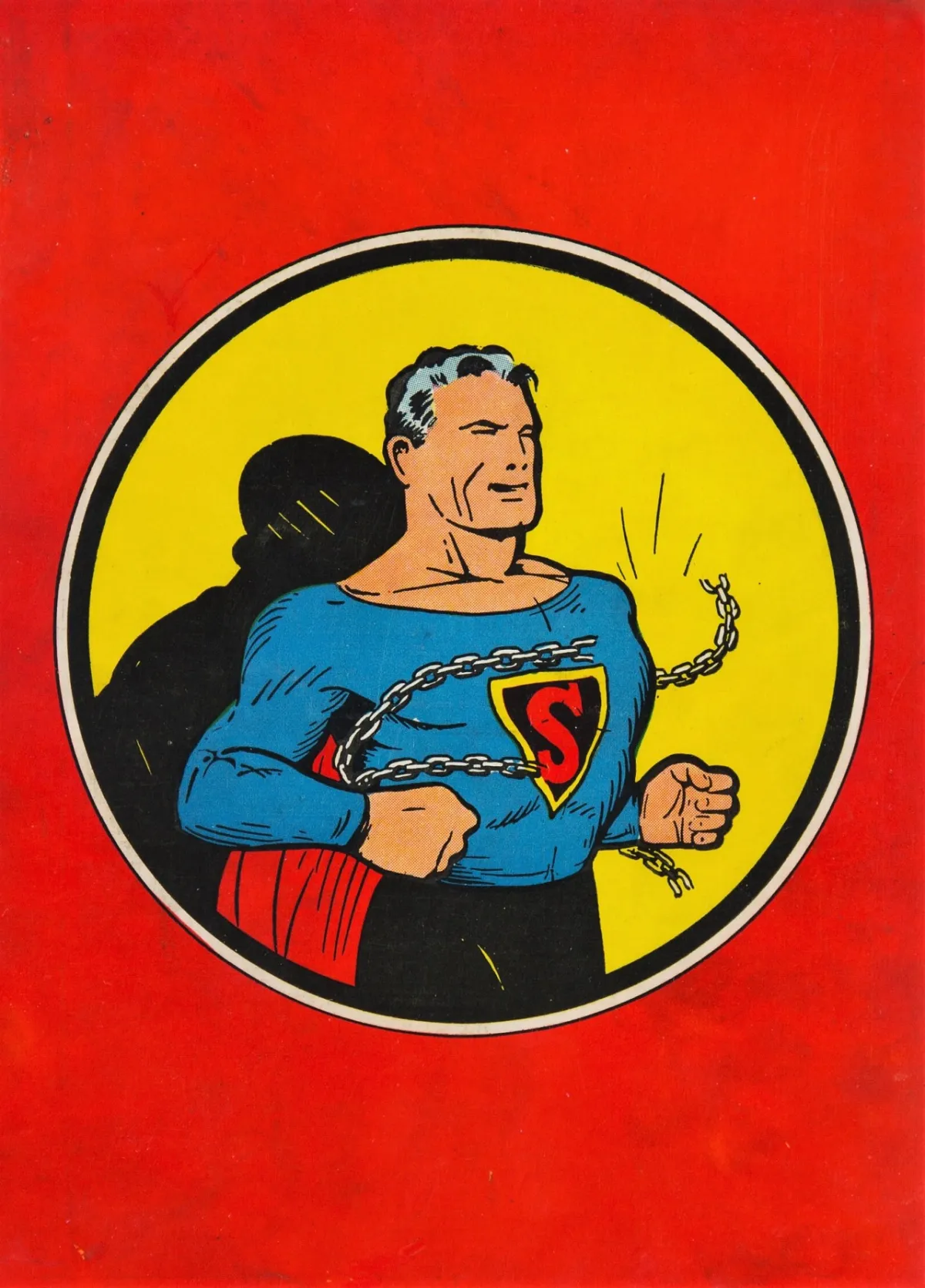 Photo: Joe Shuster, via 64.media.tumblr.com
He was small. He was nearsighted — thick-lensed glasses practically fused to his face from childhood. He'd been born in Toronto to a family of Jewish immigrants who eventually made their way to Cleveland, Ohio, in 1924, chasing the same American dream that had pulled millions of others westward across the Atlantic. But when Joe tried to participate in the physical rituals of American boyhood — sports, roughhousing, the casual athletic confidence that seemed to come so easily to kids around him — his body kept sending back the same answer: no.
Every tryout. Every physical. Every moment he lined up alongside other boys and hoped for a different result. The answer was always no.
The Apartment on Glenville
What Shuster had, instead of a working body, was a pencil and a relentless imagination.
He spent his teenage years in Cleveland's Glenville neighborhood, a community that was home to a large Jewish immigrant population and, more importantly for Joe, a best friend named Jerry Siegel. The two met at Glenville High School in the early 1930s, bonding over science fiction pulps and a shared sense of being slightly out of step with the world around them. Siegel was the writer — wordy, intense, full of ideas that tumbled over each other. Shuster was the artist, drawing obsessively in the cramped quarters of whatever apartment his family could afford, sometimes working on brown paper bags or the backs of wallpaper scraps when he couldn't get proper drawing paper.
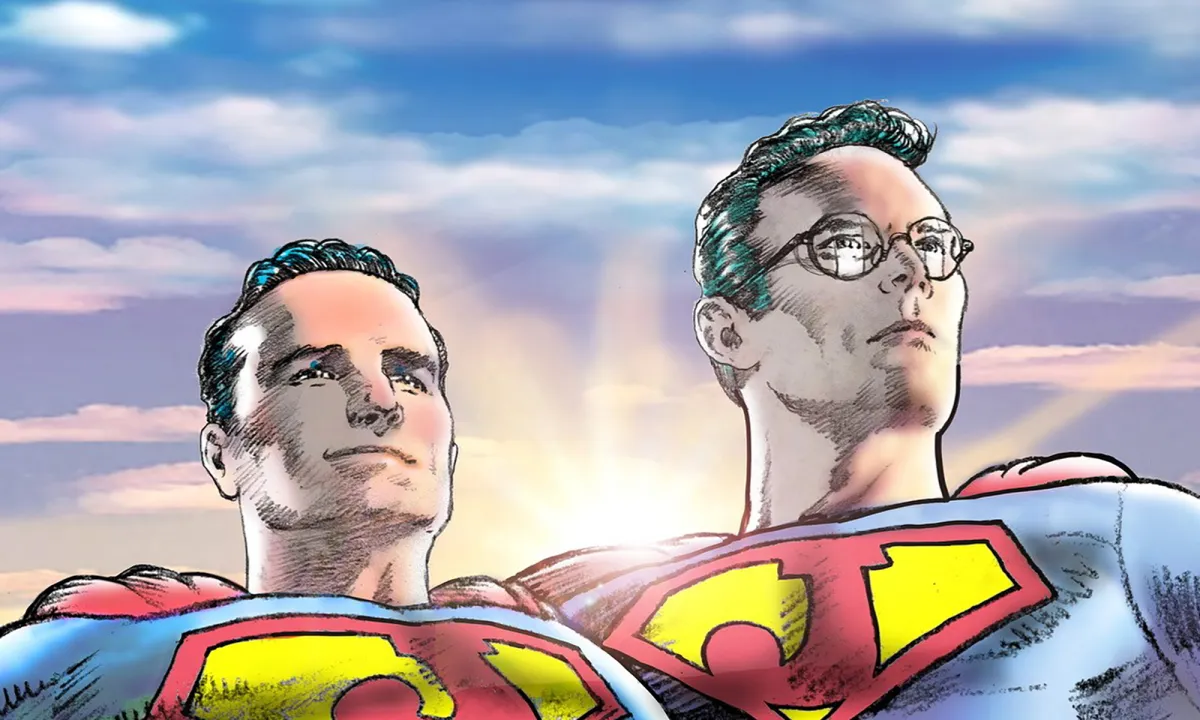 Photo: Jerry Siegel, via media.thepopverse.com
Together, they started cooking up a character.
The earliest version of Superman, sketched out somewhere around 1933, wasn't the hero we know today. He was a villain, actually — a bald megalomaniac with mental powers. But Siegel and Shuster kept reworking the concept, and somewhere in those revisions, something shifted. The character became a protector. A man of impossible physical power who used that power to defend the defenseless.
It's not hard to see what Joe Shuster was drawing.
The Body He Never Had
Look at those early Superman panels — the ones Shuster drew in that Cleveland apartment, squinting through his thick glasses — and you're looking at a portrait of longing. The chest that never gets winded. The arms that can't be held down. The eyes that see everything clearly, sharply, without aid. Superman could do everything Joe Shuster's body had ever refused to do.
And there's the other layer: the immigrant story. Clark Kent arrives in a new world as an outsider, carrying secrets, trying to fit in, hiding what makes him different because difference gets you hurt. He's got a name that sounds like it belongs, but beneath it, there's an origin that sets him apart from everyone around him. He came from somewhere else. He's making himself American by choice rather than by birth.
Shuster was doing exactly the same thing.
The character wasn't just a power fantasy. It was a map of the immigrant experience — the daily performance of ordinariness that conceals an interior life nobody around you can quite see.
Rejection, Then More Rejection
Of course, the comics industry wasn't exactly rolling out the welcome mat.
Siegel and Shuster spent years — years — trying to sell Superman to newspaper syndicates and early comic publishers. The rejections piled up like unpaid bills. Too strange. Too unrealistic. Too much. The character that would eventually define an entire genre of American storytelling couldn't get a single editor to take a chance on it through most of the 1930s.
They were young men by the time Detective Comics — what would eventually become DC Comics — finally said yes in 1938. Superman appeared in Action Comics #1 that June, and the response was immediate and overwhelming. Kids went wild. Newsstands sold out. The character that had lived in a Cleveland teenager's sketchbooks for five years was suddenly everywhere.
Siegel and Shuster sold the rights for $130. A one-time payment. No royalties. No ongoing stake in what Superman would become.
What History Decided
The business end of the story is genuinely painful. The two men spent decades in legal battles trying to reclaim some share of what they'd created, with modest success late in their lives — DC eventually granted them a small annual payment and creator credit, partly due to public pressure as the first Superman film became a blockbuster in 1978. But the fortune the character generated went elsewhere.
What can't be taken back, though, is the thing itself.
Superman didn't just launch a character — he launched a template. Every caped hero who followed, every secret identity, every story about ordinary-looking people carrying extraordinary power beneath the surface, traces its DNA back to what a near-sighted kid from Cleveland drew on whatever paper he could find. The Marvel universe, the DC universe, every superhero film that's dominated American pop culture for the past two decades — all of it has Joe Shuster's fingerprints on it.
He couldn't pass a physical. He couldn't make a team. He couldn't see the world clearly without a thick pair of glasses pressing into his face.
So he drew the man who could do all of those things — and in doing so, drew a figure that America never stopped needing.