The Witch of Wall Street Who Saved America's Money While Everyone Called Her Crazy

The Woman They Loved to Hate
In 1916, when Hetty Green died in her modest Hoboken apartment, newspapers across America celebrated. The "Witch of Wall Street" was finally gone, they declared, and decent society could stop pretending that the richest person in the country wasn't an embarrassment to civilized finance.
 Photo: Wall Street, via c8.alamy.com
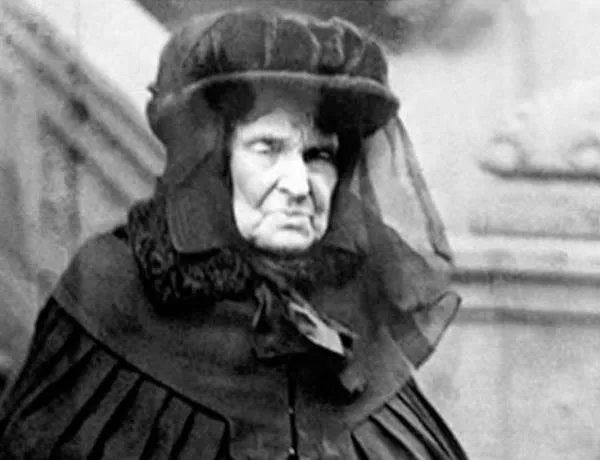 Photo: Hetty Green, via www.thesteepletimes.com
What those obituaries didn't mention was that Green's death marked the end of an era in American banking — not because she was gone, but because the conservative, methodical investment principles she'd championed from her kitchen table had quietly become the foundation of every major financial institution in the country.
For fifty years, while male financiers played fast and loose with other people's money, Green had been the adult in the room. She just happened to be a woman in an age when women weren't supposed to understand money, much less control it.
The Heiress Who Refused to Act Rich
Hetty Robinson was born into wealth in 1834, but not the kind that bred Wall Street titans. Her father made his fortune in New Bedford's whaling industry, teaching his daughter that money was earned through careful calculation, not speculation. When she inherited her family's fortune at twenty-one, Green already understood something that would elude her male contemporaries for decades: preservation mattered more than performance.
 Photo: New Bedford, via images.getbento.com
While other wealthy women of her generation spent their inheritances on European tours and elaborate wardrobes, Green moved to New York and began studying financial markets with the intensity of a scholar. She read every annual report, memorized every balance sheet, and developed investment strategies based on mathematics rather than hunches.
Her approach was revolutionary in its simplicity: buy undervalued assets, hold them for decades, never borrow money you couldn't afford to lose, and always keep enough cash on hand to weather any storm.
The Kitchen Table That Ran Wall Street
Green never rented an office on Wall Street. Instead, she managed her growing empire from a series of modest apartments, conducting business from kitchen tables and parlor chairs while her male contemporaries built monuments to their own egos. The arrangement wasn't just about saving money — it was about staying independent from the clubby world of finance that would have demanded she conform to their reckless standards.
From her domestic headquarters, Green quietly accumulated railroad stocks, government bonds, and real estate across the country. She lent money to cities during municipal crises, bailed out banks during financial panics, and consistently earned returns that made her flashier contemporaries look like amateurs.
By 1900, Green controlled assets worth more than $100 million — roughly $3 billion in today's money. She was, by any measure, the most successful investor of her generation. She was also the most ridiculed.
The Panic-Proof Portfolio
Green's true genius revealed itself during financial crises. While other investors panicked and sold at losses, Green had always maintained enough liquid capital to buy quality assets at fire-sale prices. During the Panic of 1893, when banks across the country were failing, Green stepped in to provide emergency loans that kept entire municipal governments operating.
Her contrarian approach — buying when others were selling, holding cash when others were speculating — became the template for what modern investors call "value investing." But Green wasn't following any textbook strategy. She was simply applying the practical wisdom she'd learned watching her father's whaling business survive the boom-and-bust cycles that destroyed more glamorous enterprises.
The financial establishment hated her for it. Here was a woman, working from her kitchen table, consistently outperforming the most sophisticated investment firms in the country. Worse, she was doing it by ignoring everything they considered important: insider tips, market momentum, and the kind of aggressive speculation that made for exciting newspaper coverage.
The Safety Net Nobody Acknowledged
What history has forgotten is how often Green's conservative approach saved the broader financial system. During the Panic of 1907, when even J.P. Morgan was scrambling to prevent total economic collapse, Green quietly provided the liquidity that kept several major institutions afloat. Her willingness to lend money at reasonable rates during crises helped stabilize markets that might otherwise have crashed completely.
Green's influence extended beyond individual transactions. Her success proved that conservative, methodical investing could generate wealth more reliably than the flashy speculation that dominated financial headlines. Slowly, quietly, other investors began adopting modified versions of her strategies.
By the time of her death, the principles Green had pioneered — diversification, liquidity management, contrarian investing — had become standard practice at major banks and investment firms. The men who implemented these strategies won praise as financial innovators. Green was remembered as an eccentric miser.
The Witch Who Was Right All Along
Green earned her "Witch of Wall Street" nickname through a combination of her unconventional methods and society's discomfort with powerful women. Newspapers mocked her for wearing the same black dress for years, for conducting business in modest apartments, for refusing to spend money on the kind of conspicuous consumption that marked "respectable" wealth.
What they were really mocking was a woman who had figured out how to beat Wall Street at its own game without playing by Wall Street's rules. Green's thrift wasn't pathological — it was strategic. Her isolation from financial society wasn't antisocial — it was independence.
The Legacy They Tried to Erase
Today, the investment principles Hetty Green pioneered from her kitchen table are taught in business schools as fundamental wisdom. Warren Buffett's approach to value investing echoes strategies Green developed a century earlier. The conservative banking practices that helped America weather financial crises throughout the twentieth century trace directly to methods she perfected in obscurity.
But Green herself remains largely forgotten, reduced to a footnote as the "eccentric rich woman" who happened to accumulate wealth through mysterious means. The real story — of a brilliant financier who developed revolutionary investment strategies while excluded from every institution that should have celebrated her genius — doesn't fit the comfortable narrative of American financial history.
Hetty Green died as she lived: underestimated, underappreciated, and absolutely right about almost everything that mattered. The witch of Wall Street had cast a spell that protected American finance for generations. The men who inherited her magic just forgot to mention where they'd learned it.