The Double Life Nobody Suspected
Every morning at 4:30 AM, Marcus Williams would climb into truck number 47 and begin his rounds through the affluent neighborhoods of Berkeley, California. By noon, he'd hauled away the remnants of lives he could only imagine—wine bottles from dinner parties he'd never attend, packaging from ingredients he'd never afford.
But what nobody knew, not his coworkers or his supervisor or even his own mother, was that Marcus Williams was living two completely different lives.
By 2 PM, after his shift ended and he'd showered off the day's work, Marcus would transform his cramped studio apartment into something that would have made Auguste Escoffier weep. Armed with a single burner, a temperamental oven, and cookbooks he'd rescued from estate sales, he was teaching himself the most demanding cuisine on earth: classical French cooking.
"I started because I was hungry," Williams later told Food & Wine magazine. "Not just for food, but for something beautiful. Something that mattered."
The University of Discarded Dreams
What began as curiosity became obsession. Williams would finish his garbage routes and then spend hours studying the discarded lives of others. Wealthy neighborhoods threw away more than trash—they threw away possibility.
Expired truffle oil that was still perfectly good. Copper pots with minor dents. Cookbooks with food stains that told stories of attempted dinner parties. Williams saw treasure where others saw waste.
His real education came from an unexpected source: the dumpsters behind Berkeley's most exclusive restaurants. Not for ingredients—Williams had standards—but for knowledge. Discarded prep sheets became his curriculum. Failed recipes became his case studies. He was reverse-engineering excellence from society's leftovers.
"I learned more about cooking from what restaurants threw away than most people learn in culinary school," Williams reflects. "Failure teaches you things success never can."
The Kitchen That Defied Physics
Working in a 200-square-foot apartment with equipment that belonged in a garage sale, Williams began attempting dishes that challenged restaurants with full brigades and six-figure budgets.
He practiced knife skills until 3 AM. He made stocks that simmered for days, rotating pots between his single burner and a hot plate he'd bought used. He turned his bathroom into a wine cellar and his closet into a pantry.
Neighbors complained about the smells—not because they were bad, but because they were impossibly good. The aroma of perfectly rendered duck confit and hand-rolled gnocchi drifting from a garbage collector's apartment didn't make sense to anyone.
But it made perfect sense to Williams. "When you're invisible to the world, you're free to become anything," he says. "Nobody was watching, so nobody could tell me what was impossible."
The Night That Changed Everything
For seven years, Williams perfected his craft in complete anonymity. Then, in 2019, everything changed because of a broken water heater.
His upstairs neighbor, food critic Sarah Chen, had no hot water and knocked on doors looking for help. Williams answered, and Chen caught a glimpse of what looked like a professional kitchen crammed into a studio apartment.
"I smelled something that stopped me in my tracks," Chen later wrote in the San Francisco Chronicle. "It was coq au vin, but it was perfect coq au vin. The kind you dream about but rarely find."
Williams, embarrassed but unable to lie, invited Chen to try what he was making. That impromptu dinner became a review that changed his life forever.
The Revolution Nobody Saw Coming
Chen's review didn't just praise Williams's cooking—it revealed the extraordinary story behind it. Within weeks, Williams was fielding calls from investors, restaurant groups, and television producers.
But Williams had learned something during his years in the shadows: authenticity can't be manufactured.
Instead of accepting offers to front someone else's restaurant, Williams opened "Invisible," a twelve-seat establishment in a converted garage. No tablecloths, no sommelier, no pretense. Just Williams, cooking the food he'd perfected in solitude, served to diners who had to find him first.
The Michelin Star They Never Saw Coming
In 2021, Invisible became the first restaurant in California history to earn a Michelin star without ever having a trained chef. The review called Williams's cooking "revolutionary in its simplicity, profound in its honesty."
The irony wasn't lost on Williams. The same establishment that had ignored him for decades was now celebrating him as a visionary.
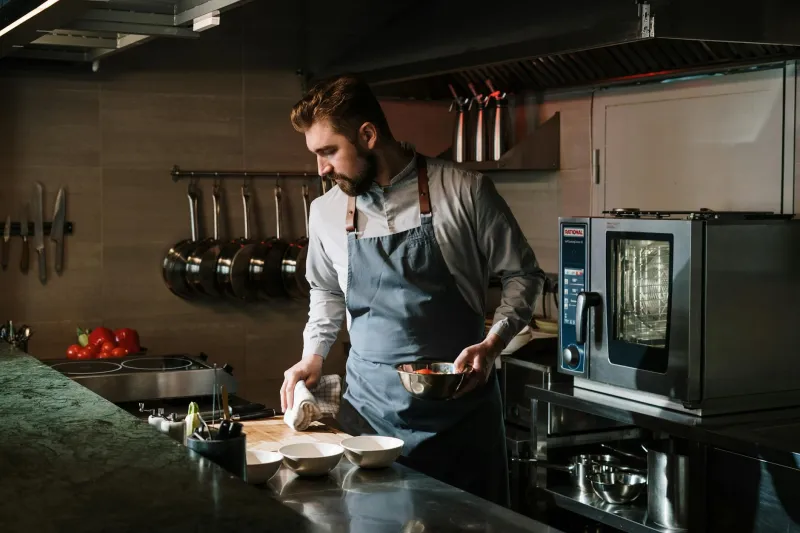
"I didn't change," Williams says, standing in the kitchen where he still cooks every dish himself. "The world just finally looked down long enough to see what was always there."
Today, Invisible has a six-month waiting list. Williams still lives in the same neighborhood, still drives past his old garbage route. But now he sees those streets differently—not as the margins of society, but as the place where the most authentic stories begin.
"The best cooking happens when nobody's watching," he says. "When you're free to fail, free to experiment, free to become exactly who you're supposed to be."
Sometimes the most extraordinary transformations happen in the most ordinary places. Sometimes genius doesn't need permission—it just needs time, space, and the courage to keep cooking even when the world isn't ready to taste what you're making.