The Diary They Tried to Bury: How One Woman's Hidden Pages Lit a Fire That Burned for a Century
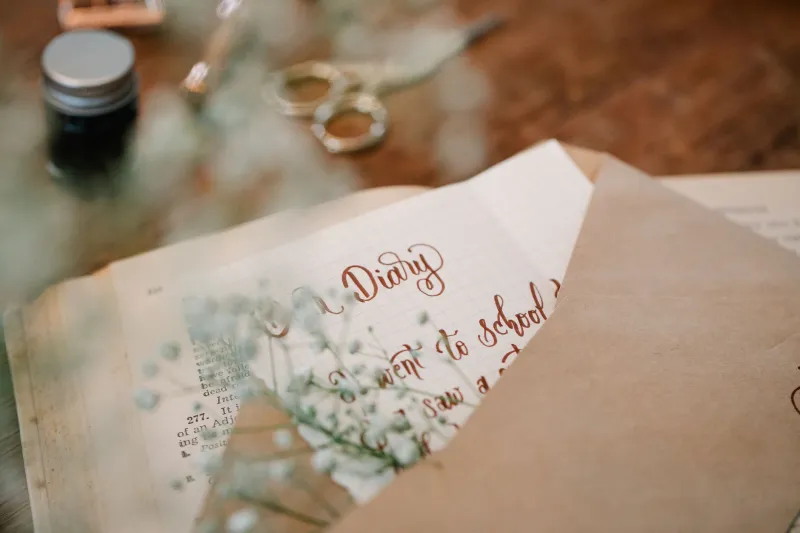
Some books arrive with fanfare. Launch events, review copies, a publicist's carefully managed rollout. They land in the culture with a satisfying thud and get discussed at dinner parties and book clubs and eventually in classrooms.
And then there are the other kind. The books that arrive like contraband — passed hand to hand, copied out by strangers, hidden under floorboards and mailed in plain envelopes. The ones that weren't supposed to exist at all.
This is the story of one of those books. And the woman who wrote it while everyone around her tried, in various ways, to make sure she'd stop.
A Room of Her Own, and Not Much Else
Agnes Whitmore was born in 1881 in a small town in western Pennsylvania, the daughter of a mill foreman and a mother who died young. By the time she was thirty, she had been married, widowed, remarried, and estranged — from her second husband, from his family, eventually from her own grown children, who found her ideas embarrassing and her stubbornness exhausting.
She supported herself through the 1910s and '20s doing piecework — sewing, laundry, occasional domestic service — and living in a series of rented rooms in Pittsburgh, Philadelphia, and eventually a narrow apartment in lower Manhattan. She was not, by any conventional measure, a person the world was waiting to hear from.
But Agnes Whitmore had been writing since she was a teenager. Not poetry, not fiction — something harder to categorize. Observations. Arguments. Furious, meticulous, sometimes brilliant analyses of the world she moved through every day: the world of women who worked with their hands, who raised other people's children, who existed in the vast invisible economy that kept American households running while receiving almost none of the credit and very little of the money.
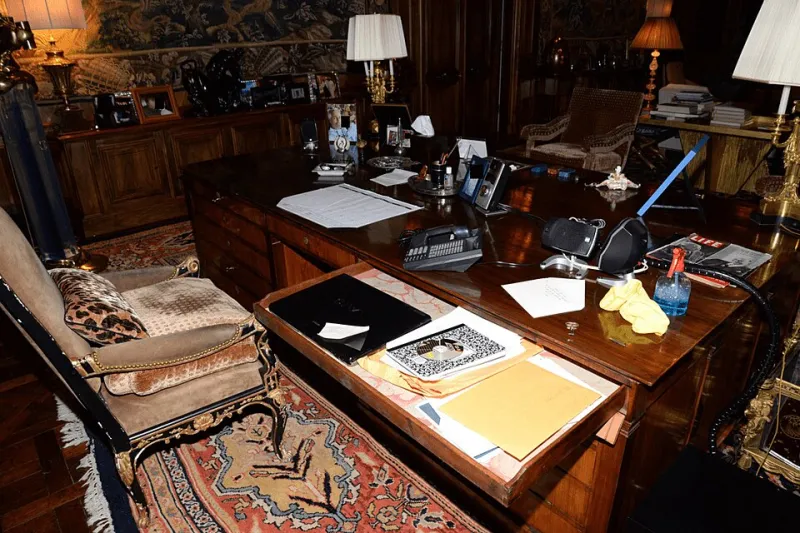
She wrote in composition notebooks, in margins, on the backs of whatever paper she could find. And in 1923, working by lamplight in a Manhattan apartment she shared with two other women, she began assembling these fragments into something larger.
What She Was Actually Saying
The manuscript Agnes produced over the next four years defies easy categorization, which is part of why it had such trouble finding a home. It wasn't a memoir, exactly, though it was deeply personal. It wasn't a political tract, though it was shot through with political argument. It was something closer to what we might now call a cultural critique — a sustained, passionate, sometimes startlingly modern examination of how American society organized itself around the fiction that certain kinds of work, and certain kinds of people, simply didn't count.
She wrote about domestic labor with the same analytical seriousness that economists brought to industrial production. She wrote about the way poverty was discussed — as a moral failure rather than a structural condition — with a sharpness that wouldn't become commonplace in mainstream American discourse for another four decades. She wrote about race and class in ways that made her manuscript unpublishable not because the arguments were weak, but because they were too uncomfortable for the publishing houses she approached.
She approached eight of them. Between 1927 and 1931, all eight declined. The rejection letters ranged from polite to condescending. One editor told her the manuscript was 'not the sort of thing American readers are looking for.' Another suggested she might consider writing something more 'suitable to her experience' — meaning, presumably, something that didn't challenge the people with the power to publish it.
The Family That Wished She'd Stop
Here's the part of the story that stings most: the sharpest resistance to Agnes's work didn't come from strangers. It came from her own children.
Her son, a mid-level manager at a Philadelphia insurance company, wrote her a letter in 1929 asking her to 'abandon this project for the sake of the family's reputation.' Her daughter, who had married well and moved to Connecticut, stopped writing to her almost entirely for several years after learning Agnes was trying to publish.
They were embarrassed. Not by anything shameful — by the fact that their mother was making noise. That she was insisting, publicly and in writing, that her life and the lives of women like her deserved to be examined seriously.
Agnes wrote about this in the manuscript itself, with a clarity that is almost painful to read: 'The people who love you most are sometimes the ones who need most urgently for you to be smaller than you are. It is not cruelty. It is fear. But it amounts to the same thing.'
She kept writing anyway.
Paper to Paper, Hand to Hand
In 1932, with no publisher and no prospect of one, Agnes did something that seems almost naive in retrospect and turned out to be inspired: she started giving the manuscript away.
Not selling it. Giving it. She had a small number of carbon copies made — expensive, for her — and distributed them to women she knew through settlement houses, labor organizations, and the informal networks of working women that moved through every American city like an underground river.
Those women copied pages by hand. They passed them on. Some sections circulated independently of the whole, photocopied and re-photocopied until the text was barely legible. A chapter on the economics of domestic work was reportedly read aloud at a labor meeting in Chicago in 1935. A section on the social invisibility of poor women was cited — without attribution, because nobody had an attribution to give — in at least three pamphlets published by women's organizations in the late 1930s.
Agnes herself had almost no idea how far the pages had traveled. She died in 1944 in the same Manhattan neighborhood she'd lived in for twenty years, in relative poverty, having never seen her work in print.
The Resurfacing
In 1968, a graduate student in American Studies at NYU named Patricia Chen was researching labor movements of the 1920s when she came across a reference, in a footnote, to an unpublished manuscript by 'a Pittsburgh domestic worker, A. Whitmore.' The footnote offered no further detail.
Patricia spent three years tracking down the manuscript. She found fragments in a labor archive in Chicago, more pages in the collection of a deceased settlement house worker in Philadelphia, and eventually — through a chain of contacts that reads like a treasure hunt — a nearly complete carbon copy in the possession of an elderly woman in the Bronx who had received it from her own mother in the 1930s and kept it wrapped in cloth in a trunk for thirty years.
The manuscript was published in 1972, with Patricia Chen's introduction, under a small feminist press in New York. It sold modestly at first. Then, as the women's movement of the 1970s found its footing, it found its audience.
By the 1980s, Agnes Whitmore's work was being taught in college courses. By the 1990s, scholars were writing papers about it. The arguments she had made in a rented Manhattan apartment in 1923 — about labor, about visibility, about the systematic undervaluation of women's work — were being cited in academic journals and policy papers and, eventually, in congressional testimony.
Why It Took So Long
The question that lingers over Agnes Whitmore's story isn't really about her. She did everything right. She observed carefully, she argued clearly, she refused to stop even when everyone around her was asking her to.
The question is about the machinery that kept her work from reaching people for forty years. The publishers who turned her away. The family that asked her to be smaller. The culture that had no framework for taking seriously the ideas of a woman who did laundry for a living.
That machinery didn't disappear. It just got more sophisticated.
But here's what Agnes Whitmore's story insists on, in every page: the ideas that most threaten a system are rarely the ones that system chooses to amplify. They move underground. They travel hand to hand. They wait.
And then, when the moment finally arrives, they surface — and everyone acts surprised, as if the truth had just occurred to someone for the first time.
It hadn't. It had been sitting in a trunk in the Bronx for thirty years, wrapped in cloth, waiting for someone to come looking.